
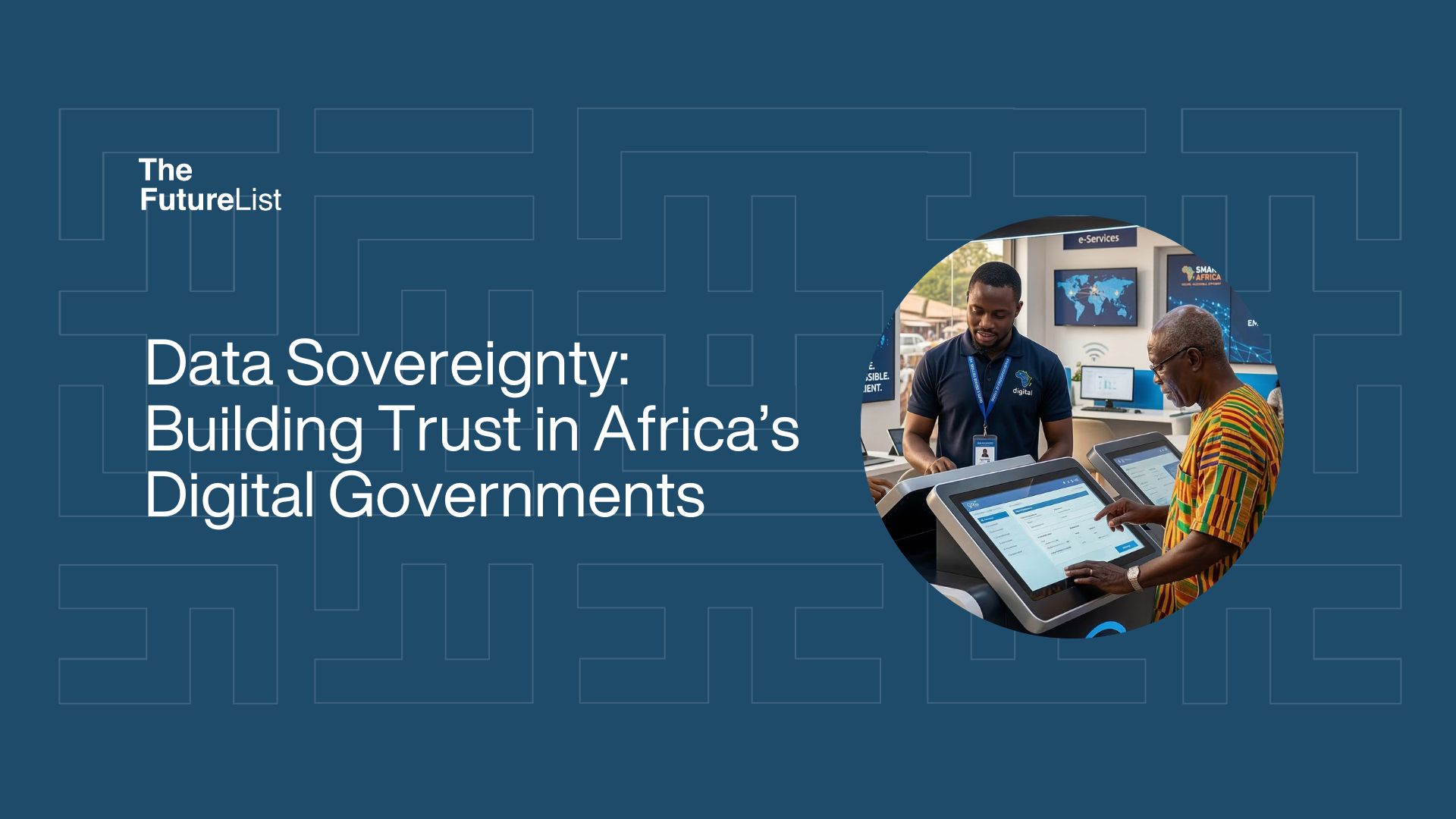
Data Sovereignty: Building Trust in Africa’s Digital Governments
By Eric Kamande
In the rush to digitize government services, from tax systems and digital IDs to AI‑enhanced public services, a new question has climbed to the top of policy agendas: who controls and governs the data that underpins these systems?
At its core, data sovereignty is simple: data stored or processed in a given territory is subject to that territory’s laws and governance. This means digital information about citizens, public services, national health or infrastructure falls under the legal authority of the country where it resides. The concept has become especially important for governments seeking to balance innovation, security, and autonomy in the digital age.
Across the world, countries are responding to these concerns in different ways. For many high‑income economies, this has taken the form of sovereign cloud platforms and in‑country data processing options from major cloud providers. For example, AWS recently launched its European Sovereign Cloud, a physically and legally separate infrastructure intended to meet strict EU data governance and legal standards for sensitive data storage and processing. Similarly, BT in the United Kingdom unveiled a sovereign data platform for public‑sector and business users to ensure sensitive data is housed and operated within UK jurisdiction. These moves reflect a broader global trend: governments and organizations want assurances that their data cannot be accessed or controlled by foreign jurisdictions or subject to unpredictable legal demands.
But the conversation is especially urgent in Africa, where data sovereignty is intertwined with debates around digital transformation, economic autonomy, and technological self‑determination.
African Governments and the Push for Local Control
In many African countries, the digitization of government services is accelerating. E‑government platforms, national ID systems, and early AI policy frameworks are emerging as governments seek to improve service delivery and economic competitiveness. However, a persistent reality has been that much of the continent’s digital infrastructure, including cloud storage and AI training, relies on foreign providers. That has raised concerns about data extraction, loss of control, and digital dependency.
These concerns have spurred interest in local data governance frameworks, policies on data localization, and investment in domestic or regional data infrastructure. The rationale is both practical and political: keeping critical data within national borders can strengthen public trust, improve responsiveness of public services, and reduce vulnerability to extraterritorial legal regimes or geopolitical pressure.
Countries such as Rwanda have been early pioneers on this front, incorporating data governance and cybersecurity into national digital strategies. Official policy documents emphasize the need to preserve national control over data, particularly when scaling digital public infrastructure. Similarly, emerging digital strategies, such as Ethiopia’s Digital Ethiopia 2030 blueprint, explicitly include data sovereignty and cybersecurity as foundational pillars of national digital transformation.
Across the continent, a growing trend is requiring that certain types of public‑sector data are initially collected, processed or stored within national boundaries, a pattern known as data localization. These policies differ from outright bans; they generally stipulate conditions under which data can be exported or processed abroad, striking a balance between openness and control.
The Global Shift and the Road Ahead
Data sovereignty debates are not confined to Africa. In Europe, federated data infrastructure projects such as Gaia‑X aim to ensure data infrastructure meets local legal and governance expectations while preserving interoperability. Meanwhile, cloud and tech giants are adapting to demand for localized processing, with companies like Microsoft expanding in‑country data options for AI and cloud services across multiple regions.
Yet, experts caution that local data storage alone doesn’t automatically guarantee sovereignty. Even a locally hosted data center may be controlled by a foreign entity subject to external legal claims, underscoring the need for robust governance frameworks and clear legal protections.
For many African governments, the challenge is to build data infrastructure and policy frameworks that support innovation while protecting national interests and citizens’ rights. This requires investment not just in physical infrastructure like local data centers, but also in legal frameworks, skilled personnel, and regional cooperation mechanisms.
Get innovation insights from The FutureList weekly. Subscribe to our newsletter here
Categories
- Agritech
- Artificial Intelligence
- Biotech
- Blockchain
- Climate Tech
- Data Infrastructure
- Edtech
- Events
- Fashion
- Fintech
- Healthtech
- Infrastructure
- Innovation Memos
- Innovation Scout Program
- Insight
- Insurtech
- Machine Learning
- Martech
- Mobility
- Music and Media
- Partner Offers
- Perks
- Procurement
- Proptech
- Retailtech
- Ridehailing
- Ridesharing
- Robotics
- Space Aviation
- Supply Chain
- Talent
- Telecoms
- Uncategorized
- Venture Capital
- Wastetech
- Women In Tech
Recent Posts
- Data Sovereignty: Building Trust in Africa’s Digital Governments
- How Computer Vision Is Reshaping Non-Invasive Screening
- The Rise of Rugged Tech: Why IoT Hardware Built for Africa Looks Different
- How Software Is Re‑Wiring the First Minutes of an Emergency
- Crafting Customised Virtual Networks for the 5G Era and Beyond with Network Slicing