
How Software Is Re‑Wiring the First Minutes of an Emergency
By Eric Kamande
For decades, emergency calls began the same way: a ringing phone, a stressed caller, and a human dispatcher piecing together the story through background noise and adrenaline. Only after precious minutes could responders decide what to send, and sometimes the information was already stale when they arrived.
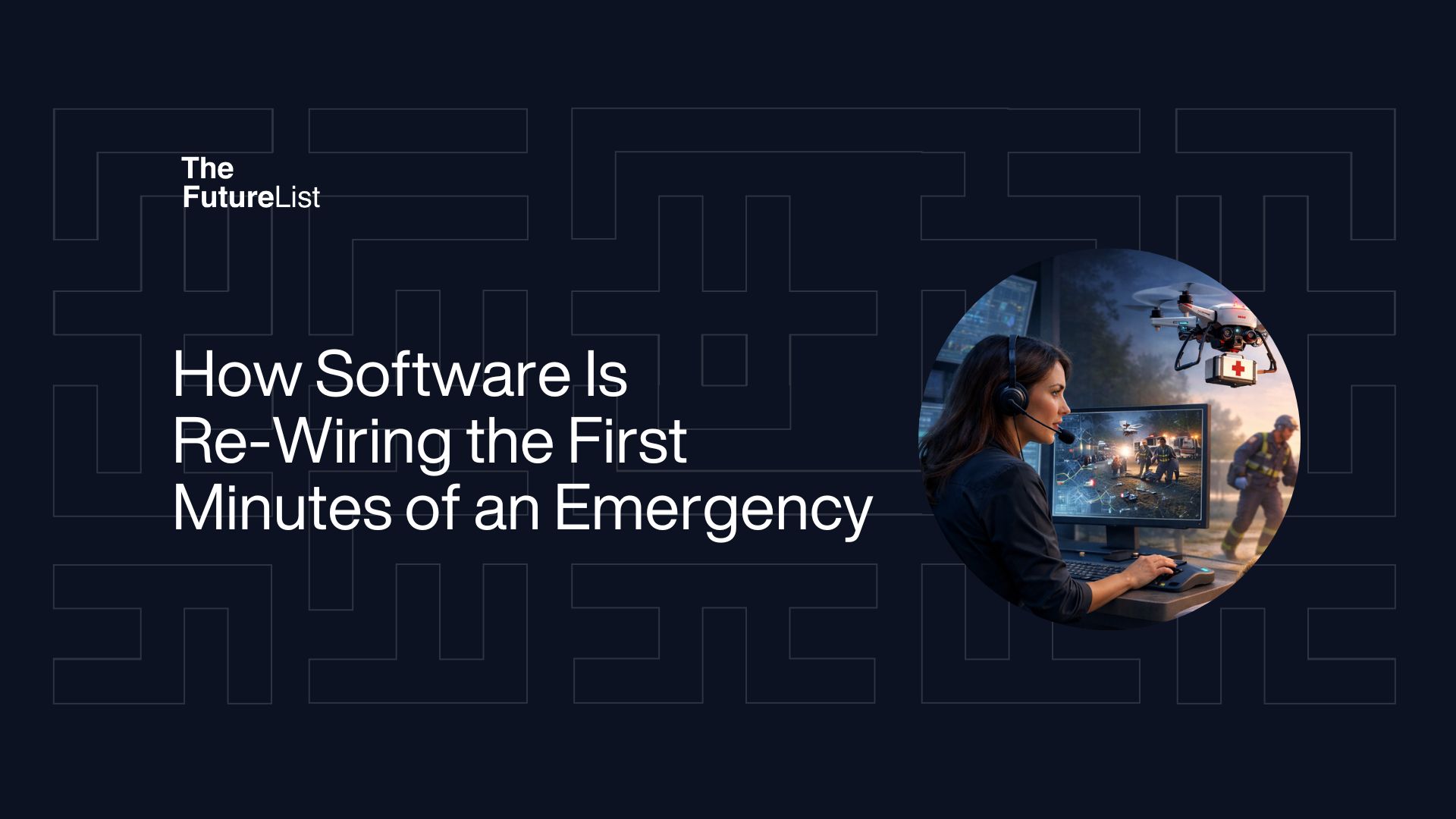
A new generation of toolmakers is quietly rebuilding that workflow from the silicon up. Speech models now transcribe and triage before a call‑taker even picks up, while autonomous ground and aerial robots give responders a remote set of eyes (and wheels) in seconds. The point is not to replace people, but to give them verified context the moment they say “What’s your emergency?”
Why the Old Model Is Buckling
- Call volumes keep climbing. The U.S. National Emergency Number Association logged more than 240 million 9‑1‑1 calls in 2024, up 17 percent in five years as mobile phones replaced land‑lines.
- Noise and language barriers matter. Over a third of U.S. households now speak a language other than English at home; in many cities the wait for an interpreter stretches past two minutes.
- On‑scene risk is rising. Lithium‑battery fires, chemical spills from e‑commerce warehouses, and violent weather leave responders guessing what they will face until they arrive.
Digital tools that sift audio, video, and IoT feeds in real time promise to shave minutes from every step, turning the chaotic first moments of an incident into structured intelligence for humans in the loop.
Hyper’s Front Door for 9‑1‑1
Hyper, a U.S. startup that surfaced in July 2025 with a US $6.3 million seed round, is led by Damian McCabe and Ben Sanders. Its software sits directly in the telephony chain. As soon as a call connects, Hyper produces a live transcript and highlights critical words, “fire,” “gun,” “unconscious”, before a dispatcher even speaks. A companion model gauges caller stress from breathing patterns and background clatter. In two mid‑sized counties piloting the system, average triage time has fallen from 82 to 54 seconds. Interpreter hand‑offs dropped 40 percent because transcripts arrive machine‑translated, and false call‑backs, when a call drops before the dispatcher answers, have halved. Running on local servers inside the public‑safety answering point keeps sensitive voice data off third‑party clouds, a design that helps Hyper satisfy recent privacy rules in California and Illinois.
Asylon’s Robotic Perimeter Scouts
Philadelphia‑based Asylon Robotics, founded in 2015 by aerospace engineer Damon Henry, began with drone‑in‑a‑box security and has since rolled out the “Pup,” a 25‑kilogram ground rover. When a panic alarm or Hyper‑tagged gunshot call hits dispatch, the Pup leaves its charging kennel, accelerates to 12 km/h, and streams encrypted video and thermal imagery back to the command center. Operators can broadcast warnings through a loudspeaker without waiting for police to arrive. In industrial yards where response teams often share a single patrol vehicle, customers say first visual confirmation time has fallen from ten minutes to under two. Asylon prices the service at roughly US $7 per operating hour, cheaper than adding a guard shift and simpler than licensing drone pilots.
Inside the New Hardware
None of this would be possible without cheap, power‑efficient processors on site. Edge GPUs that draw under 10 watts can now handle speech‑to‑text or real‑time object detection without trips to the cloud. The legal environment is more welcoming too. The U.S. 9‑1‑1 Upgrade Act of 2023 opened APIs that let approved analytics plug into emergency networks without replacing core phone systems. Meanwhile, solid‑state lidar and vision chips have fallen 70 percent in cost since 2020, turning mobile robots from capital luxuries into service subscriptions.
Where This Could Go Next
- Sensor fusion at the streetlight: Cities are testing poles that merge acoustic gunshot detection, air‑quality sensors, and Hyper‑style speech analytics for open mics during festivals.
- Pre‑incident medical triage; Startups are adapting smartphone cameras to measure heart and breathing rates during voice calls, giving EMS a head‑start on stroke or overdose cases.
- Cross‑agency playbooks; Insurance firms and utilities increasingly want a live feed when their assets are involved. Shared dashboards could turn dispatch data into instant claims or outage tickets, trimming days off recovery.
Looking forward
Cutting dispatch‑to‑arrival time by a single minute can raise cardiac‑arrest survival odds by up to eight percent, according to the American Heart Association. Scale that across house fires, chemical leaks, and highway pile‑ups, and the stakes become clear. Hyper and Asylon illustrate a broader shift: life‑and‑death decisions are moving from manual phone trees to layered software that transcribes, analyses, and acts in real time, delivering critical context to responders before wheels start rolling.
Get innovation insights from The FutureList weekly. Subscribe to our newsletter here